The entire essay can be found at https://lifevocation.blog/2026/06/05/surrendering-autonomy/
Pip: Life Vocations is a site that asks the kinds of questions most people save for three in the morning and never write down. Today we’re going into the territory of surrender — what it costs, what it actually means, and why the oldest human instinct keeps pulling in the opposite direction.
Mara: Bryan D. Stafford is the writer behind all of it, and the ground we’re covering today is the desire for self-rule — where it comes from, what Scripture says about it, and what childlike trust looks like as a serious theological posture. Let’s start with the reach for autonomy and why it keeps showing up.
Surrendering Autonomy
Mara: The central question here is whether the drive to understand everything before you trust is a virtue or a symptom. The post traces that drive all the way back to Eden and argues that the first sin was less about disobedience and more about a specific kind of ambition.
Pip: The setup is the serpent’s offer in Genesis 3 — not pleasure, but knowledge — and the post names exactly what made it so appealing: “I rarely covet anything as obviously wrong as the serpent’s lie sounds when stated plainly. I covet competence. I covet the position of the one who sees the whole board and needs no one to explain it to him.”
Mara: That reframe matters because it shifts the stakes from a rule broken to a position claimed. The post calls it autonomy in the most literal sense — self-law, self-rule — and argues that Adam and Eve weren’t just disobeying a command; they were attempting to relocate the center of reality from God to themselves.
Pip: And what they got for it was not the panoramic view they were after. The eyes that opened beheld nakedness, not glory.
Mara: Right — and the post reads that sequence as instructive. Knowledge pursued apart from trust produced shame and hiding, not freedom. The phrase it uses for the sinful condition is the Lutheran term incurvatus in se — the self curved inward, bent away from dependence and folded back onto its own self-sufficiency.
Pip: So the tradition actually has a name for the thing most people spend their whole lives calling ambition.
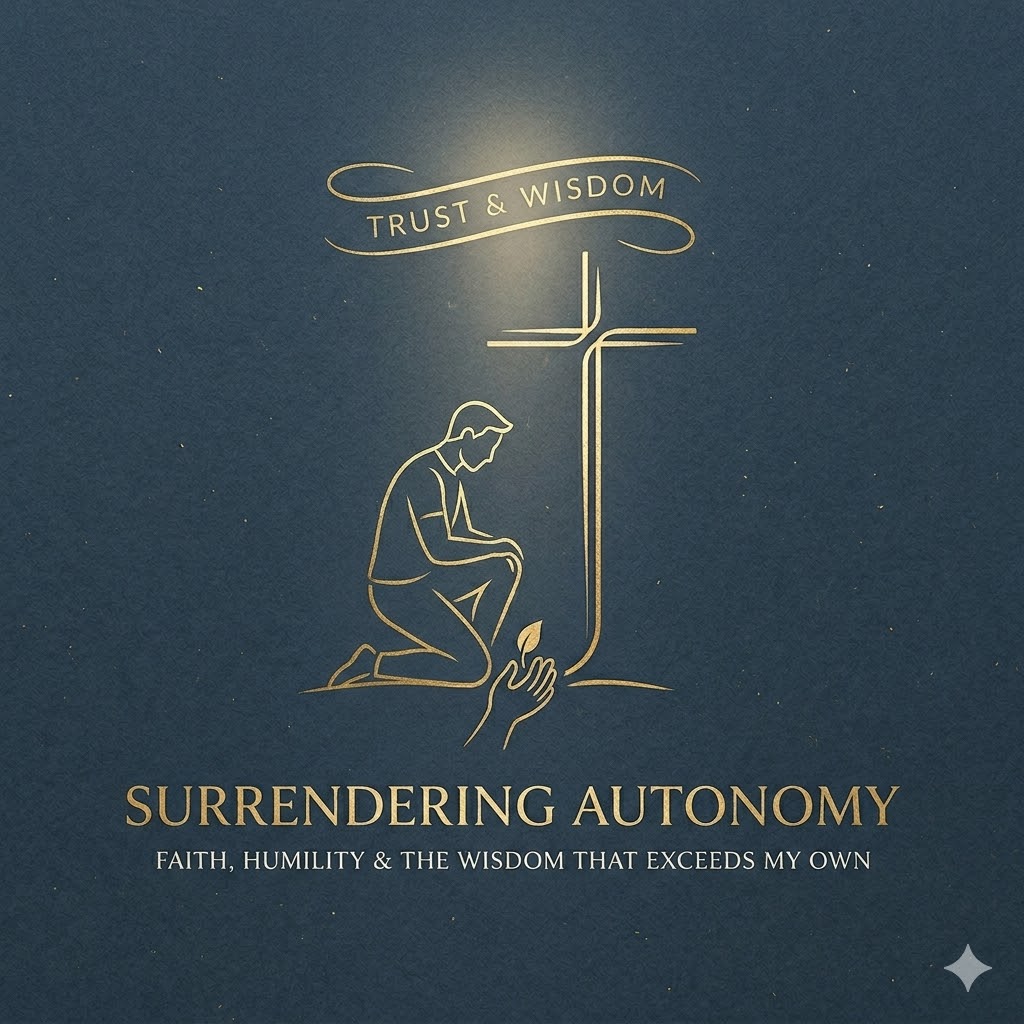
Mara: The counter-call the post sets against that is drawn from Proverbs and from Jesus placing a child in front of the disciples. The child isn’t praised for being credulous — the point is dependence, openness, willingness to receive. Trust precedes comprehension, and the child is none the worse for it.
Mara: The Christological turn lands hardest. Where Adam grasped at likeness to God and fell into shame, Christ — who was actually “in very nature God” — “made himself nothing,” taking the form of a servant. The whole movement of Eden runs backward.
Pip: The thing you reached for by force is given to you by the One who refused to take it by force. That’s either the most ironic structure in theology or the most graceful one.
Mara: The post lands on freedom as the destination — not freedom from dependence, but freedom in it. To belong wholly to God is to be unowned by everything else: by the need to understand, by circumstances, by the long labor of self-rule.
Pip: So the oldest temptation turns out to be the most persistent one — not the dramatic ones, but the quiet insistence that if you just gather enough information, you’ll finally be at rest.
Mara: And the answer Scripture keeps returning to isn’t less thinking. It’s right ordering — reason as a servant, trust as the ground. Worth sitting with before the next one.


Leave a comment